

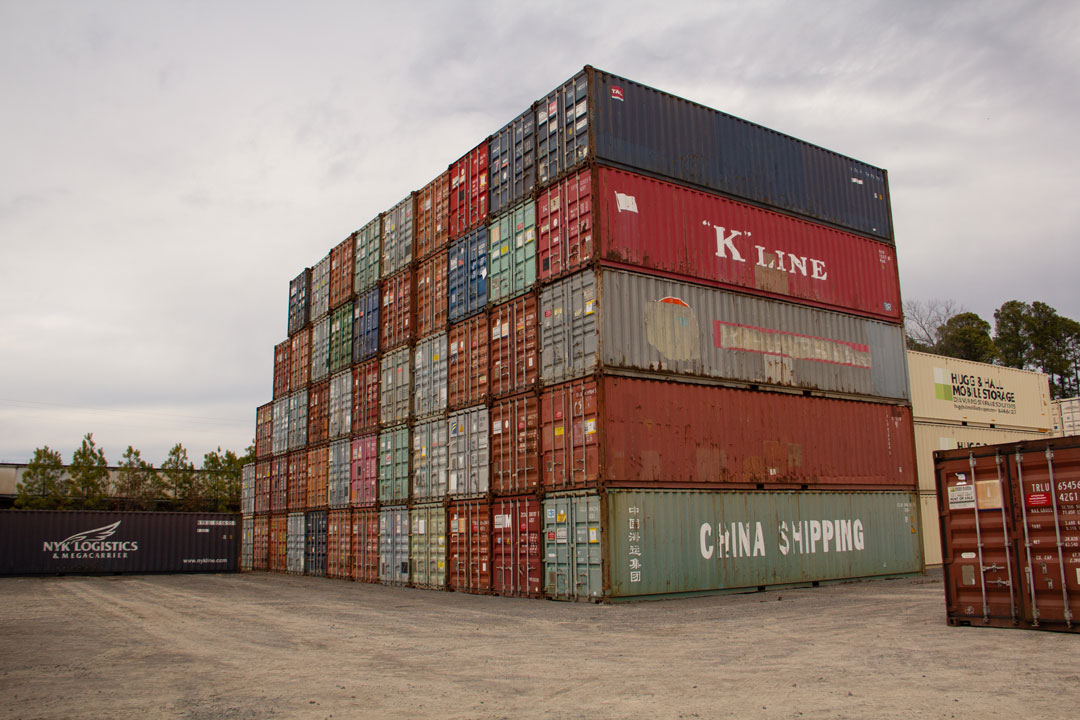
What is a Dry Container?
A dry container, also referred to as a general-purpose or general cargo container, is one of the most common types of intermodal containers used in global shipping today. Intermodal containers are large, standardized steel boxes that can easily be transferred between different modes of transportation, such as ships, trains and trucks.
Dry containers transport cargo that does not require temperature control, ventilation or any other specialized environment. They are versatile containers suitable for most types of general cargo, such as pallets, boxes, bales, drums, or loose cargo like grain.
Dry containers play a vital role in the global intermodal freight transport system. They allow seamless transfer of cargo between ships, trains and trucks without having to unload and reload the cargo every time it changes transport mode. This containerization of cargo has led to huge gains in efficiency and productivity.
Around 90% of non-bulk cargo around the world is transported using containers stacked on transport ships. The standardization of container sizes and designs has been an important driver of global trade and facilitated the rise of international supply chains. By providing a secure and modular way of transporting cargo over long distances, containers have dramatically lowered transport costs and supported the growth of international trade.
While refrigerated containers are used for perishables and tank containers are used for liquids, dry containers are the workhorse of global trade, carrying all kinds of general cargo safely and efficiently around the world. They provide a fundamental link in the intermodal transport system. The most common standard dry container today is the 20-foot (6.1m) container, which provides versatile and widely accepted packaging for industrial and retail goods.
Dry Container Sizes
Dry containers (DC) stand out as the predominant container type globally, with 90% of sea-shipped goods being loaded into them. Crafted from either aluminium or steel, the 20-foot and 40-foot cargo containers prove versatile, accommodating various types of cargo.
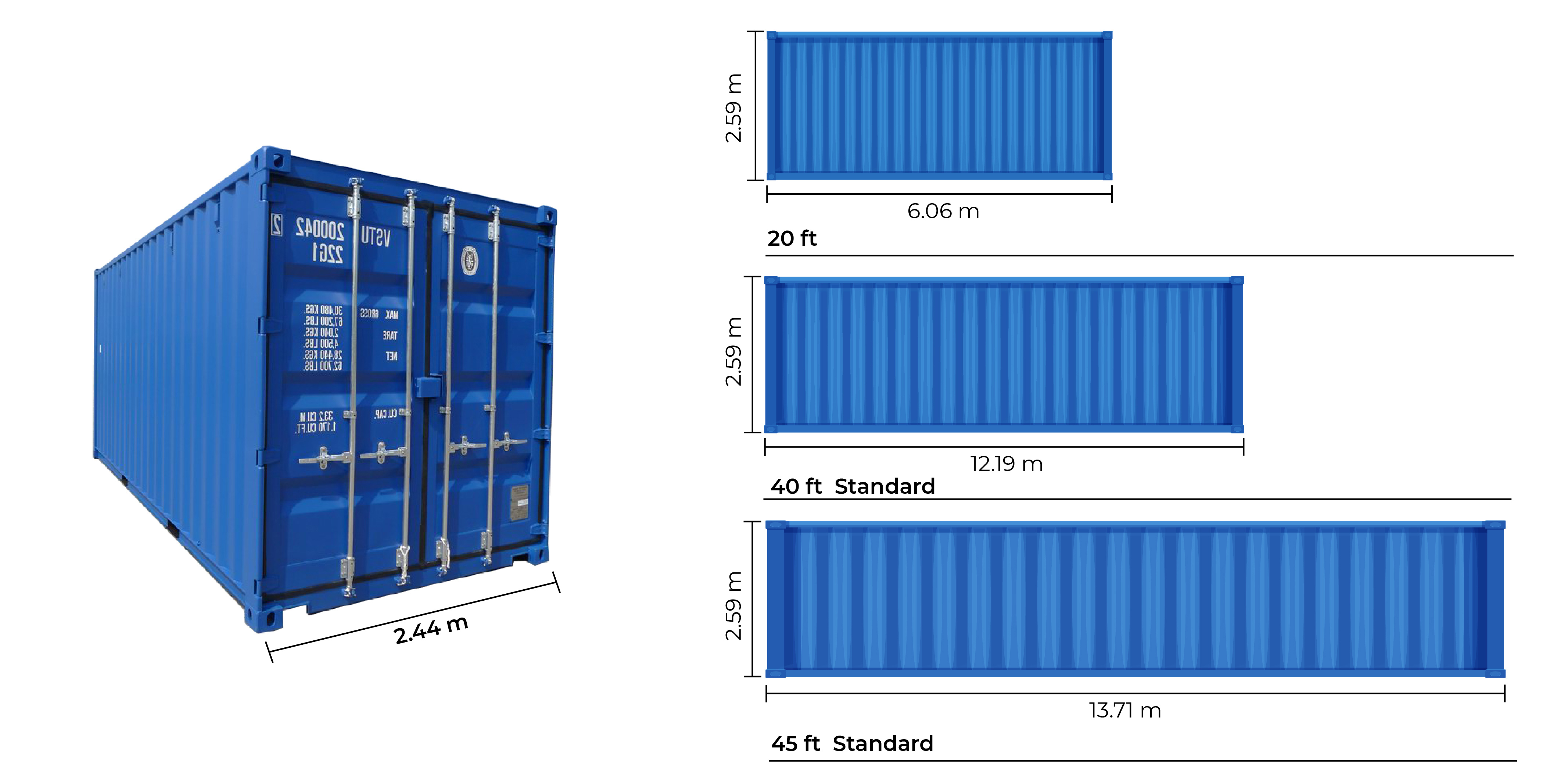
Dry containers come in a range of standard sizes, the most common being 20ft, 40ft, and 45ft
Here’s an overview of the dimensions and capacities of the most common sizes:
20ft Dry Container
– Length: 20ft (6.10m)
– Width: 8ft (2.44m)
– Height: 8ft 6in (2.59m)
– Door opening: 7ft 8in (2.34m) high x 7ft 5in (2.26m) wide
– Capacity: 1,170 ft3 (33.1 m3)
The 20ft container is the smallest and most common size of dry container. It can carry around 28,000 lbs (12,700 kg) of cargo. 20ft containers are used extensively worldwide due to their versatility and standard dimensions that fit well in vessels, trucks, and trains designed for intermodal transport.
Exterior Dimensions of 20 ft. Containers
| Type of Container | Height | Height (Metric) | Width | Width (Metric) | Length | Length (Metric) |
| Standard 20-foot Shipping Container | 8ft. 6in. | 2.59m | 8ft. | 2.44m | 20 ft. | 6.06 m |
| High Cube 20 ft. Shipping Container | 9ft. 6in. | 2.89m | 8ft. | 2.44m | 20ft. | 6.06 m |
Internal 20 Foot Container Dimensions
| Type of Container | Height | Height (Metric) | Width | Width (Metric) | Length | Length (Metric) |
| Standard 20-foot Shipping Container | 7ft. 10 in. | 2.38m. | 7ft. 8.5in. | 2.35m. | 19ft. 8in. | 5.9m |
| High Cube 20ft. Shipping Container | 8ft. 9in. | 2.69m. | 7ft. 8.5in. | 2.35m. | 19ft. 8in. | 5.9m |
Weight of 20 ft. Containers
| Type of Container | Tare Weight (lbs) | Tare Weight (kg) | Max Cargo Weight (lbs) | Max Cargo Weight (kg) |
| Standard 20 ft. Shipping Container | 4,409 lbs | 2,000 kg | 67,200 lbs | 30,480 kg |
| High Cube 20 ft. Shipping Container | 4,629 lbs | 2,100 kg | 67,200 lbs | 30,480 kg |
40ft Dry Container
– Length: 40ft (12.20m)
– Width: 8ft (2.44m)
– Height: 8ft 6in (2.59m)
– Door opening: 7ft 8in (2.34m) high x 7ft 5in (2.26m) wide
– Capacity: 2,380 ft3 (67.4 m3)
The 40ft dry container has become the global standard and makes up about 60% of the worldwide container fleet. It can carry around 58,000 lbs (26,000 kg). 40ft containers offer much more volume and payload capacity than 20ft containers, making them ideal for many types of cargo. They utilize space more efficiently in ships and double the capacity of 20ft containers.
Exterior Dimensions of 40 ft. Containers
| Type of Container | Height | Height (Metric) | Width | Width (Metric) | Length | Length (Metric) |
| Standard 40’ Shipping Container | 8ft. 6in. | 2.59m | 8ft. | 2.44m | 40 ft. | 12.19m |
| High Cube 40’ Shipping Container | 9ft. 6in. | 2.89m | 8ft. | 2.44m | 40ft. | 12.19m |
Internal 40 Foot Container Dimensions
| Type of Container | Height | Height (Metric) | Width | Width (Metric) | Length | Length (Metric) |
| Standard 40’ Shipping Container | 7ft. 10in. | 2.38m. | 7ft. 8.5in. | 2.35m. | 39ft. 6in. | 12.02m. |
| High Cube 40’ Shipping Container | 8ft. 9in. | 2.69m. | 7ft. 8.5in. | 2.35m. | 39ft. 6in. | 12.02m |
Volume of 40 ft. Containers
| Type of Container | Volume | Volume (Metric) |
| Standard 40’ Shipping Container | 2,350 cubic ft. | 33 cubic meters |
| High Cube 40’ Shipping Container | 2,694 cubic ft. | 76.3 cubic meters |
Weight of 40 ft. Containers
| Type of Container | Tare Weight (lbs) | Tare Weight (kg) | Max Cargo Weight (lbs) | Max Cargo Weight (kg) |
| Standard 40’ Shipping Container | 8333.5 lbs | 3,780 kgs | 58,863.4 lbs | 26,700 kgs |
| High Cube 40’ Shipping Container | 8862.6 lbs | 4,020 kgs | 58,334.3 lbs | 26,460 kgs |
45ft High Cube Dry Container
– Length: 45ft (13.7m)
– Width: 8ft (2.44m)
– Height: 9ft 6in (2.9m)
– Door opening: 8ft 2in (2.5m) high x 7ft 8in (2.34m) wide
– Capacity: 2,650 ft3 (75 m3)
The 45ft high cube container has an increased height compared to standard 40ft containers. It provides around 12% more cubic capacity while still fitting in the same shipping infrastructure designed for 40ft boxes. High cube 45ft containers are useful for bulky, voluminous cargo.